12 Apps in 12 Months
This year, one of my new years resolutions is to create more side projects. Specifically, I've set a goal to ship* 12 apps in 12 months. One idea each month. Small, focused, and complete. At the end of each month I'll add a new project here.
Why, you might ask?
As a product designers, I think that working on side projects has become more important than ever before. The ground is continually shifting under our feet. AI models, combined with agentic coding tools like Cursor or Claude code mean designers have the superpowers to build a fully working app. In hours, not weeks. It's exciting, but it can also feel anxiety inducing.
The best way to keep up is to play, and side projects are a low-risk way to do this. To have fun with our new superpowers.
Side projects have always been a place where one can focus purely on craft. No roadmap pressure. No design by committee. No endless alignment meetings. I get to choose the scope. I get to decide when it’s good enough to ship. I get to choose the tools i use and the process i follow. I get to work on that fancy animation without convincing the team that it's worthwhile.
So here are the projects that I am working on in 2026. I'll be updating this article throughout the year, as I build more things.
January — Mockery
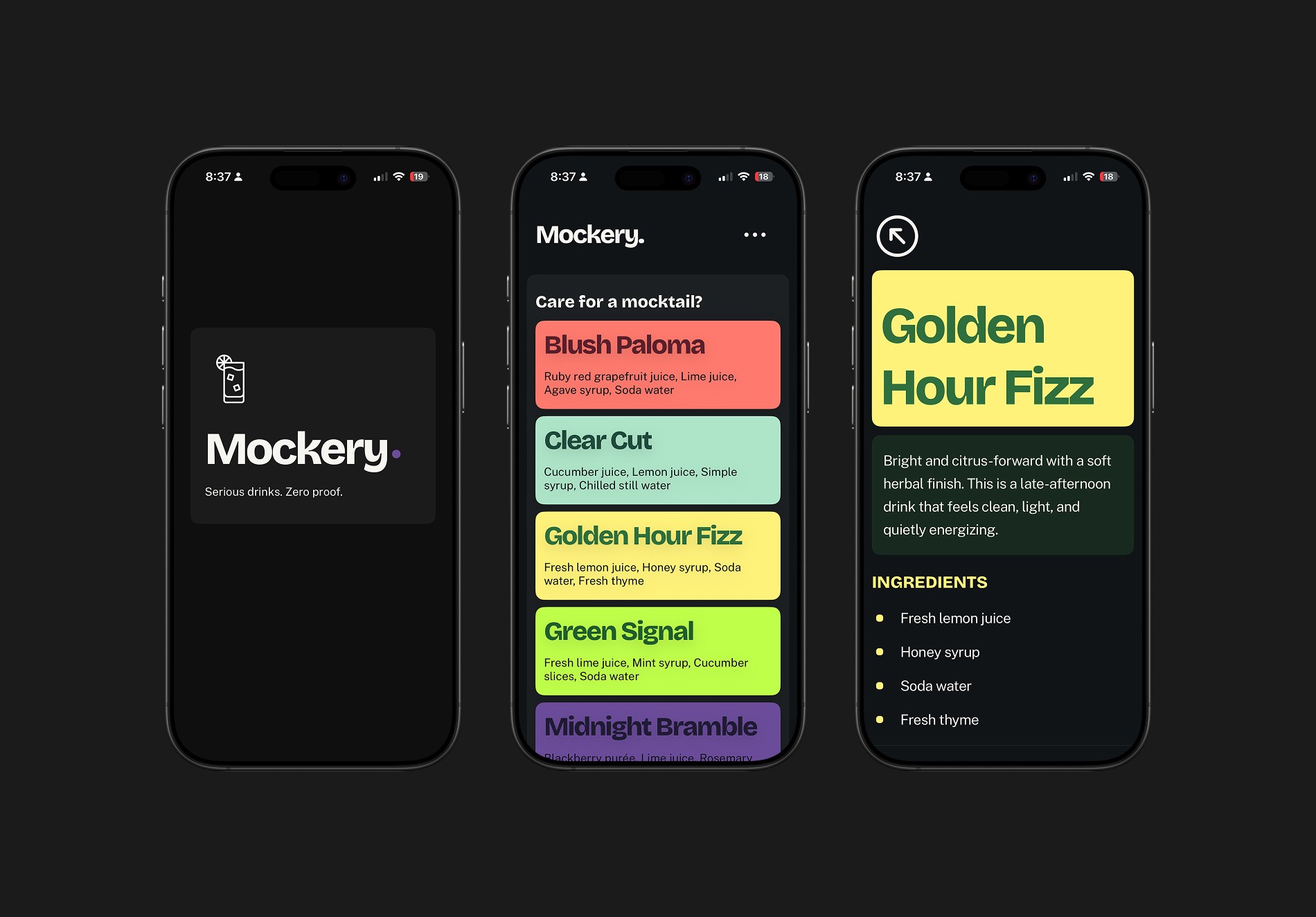
I began the year by building my first native iPhone app, called Mockery, and it's a curated directory of mocktail recipes. My other new years resolution this year is to quit drinking. So this felt like a good thing to focus on during my first dry month.
Mockery is a lightweight app that serves as a curated directory of mocktail recipes. I made it intentionally simple. A simple list of drinks, with a dedicated recipe page for each one. No backend. No accounts. No unnecessary complexity.
My process for this one started with some lightweight brand direction; exploring brand names with chat GPT, and colors and typography using Pinterest.
The recipes themselves are powered by structured Markdown files, which makes the content easy to write, edit, and expand over time. That decision kept the architecture lean and flexible. I scaffolded the app in Xcode and built it with SwiftUI, using Cursor as a coding partner. Figma MCP helped translate some early design mocks directly into implementation.
*To clarify - when I say 'ship', I'm not intending to launch all of these apps to the public. The process of creating a working product is the goal, even if it is only sitting on my phone. I would like to ship something to the app store though.